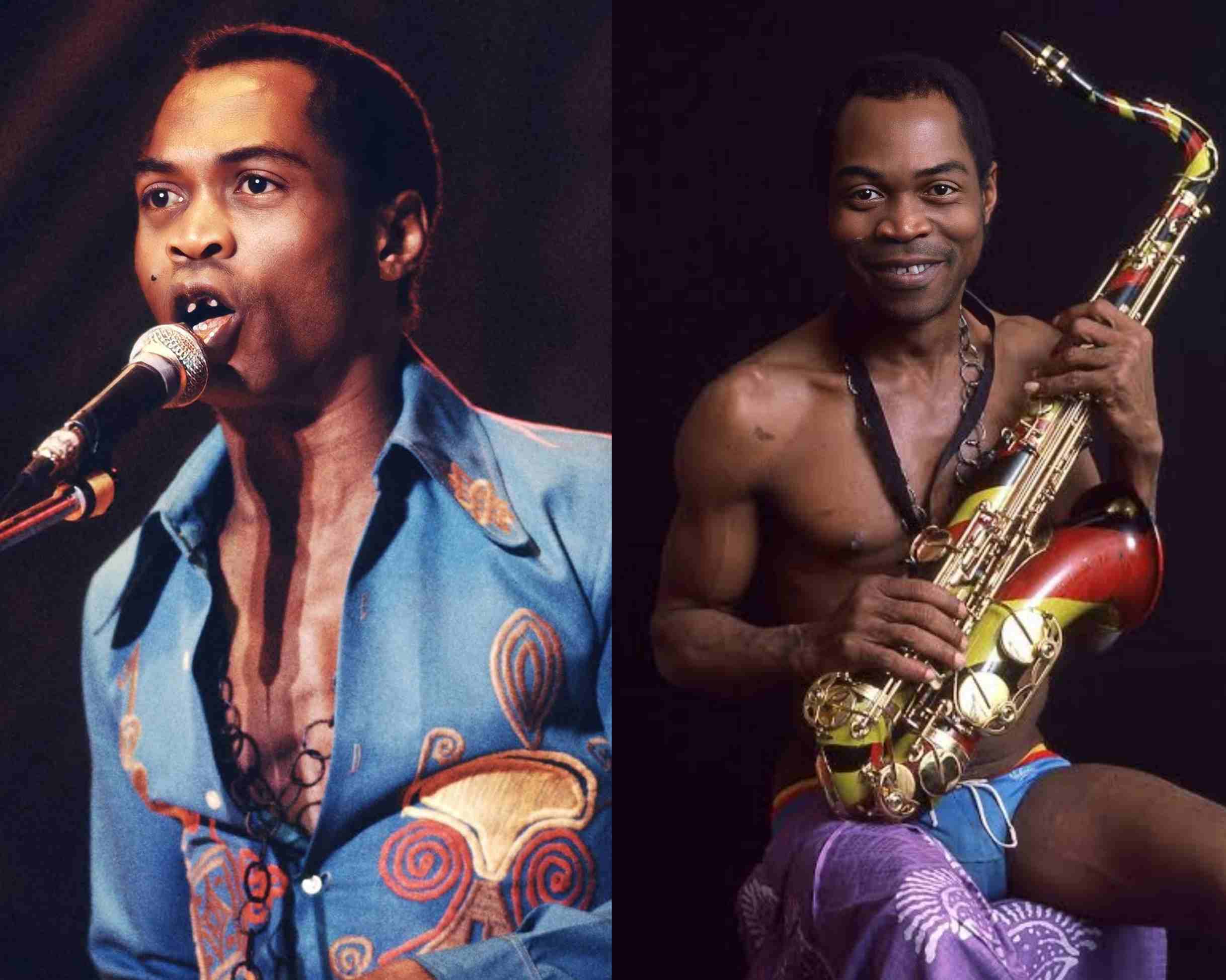
Younger and older Nigerians have continued to argue over the comparison between Afrobeat pioneer, Fela Anikulapo-Kuti, and Grammy award-winning singer, Ayo Balogun, better known as Wizkid.
Yencityjamz reports that amid the ongoing public exchange, Fela’s son, Seun Kuti, has insisted that Wizkid’s comparison with his father’s legacy in the music industry, philanthropy, and activism is disrespectful.
Understanding Fela’s journey provides essential context for the ongoing controversy and debates on authenticity, artistic purpose and the evolution of Afrobeat from its revolutionary roots to its modern, globally recognised form.
Below are ten things you probably did not know about Fela.
1. Fela was born Olufela Olusegun Oludotun Ransome-Kuti on October 15, 1938, in Abeokuta, Ogun State, Nigeria. He was known for his nonconformist lifestyle, including marrying 27 women in a single ceremony in 1978.
2. Fela studied classical music and trumpet at Trinity College of Music in London. During his time abroad, he was exposed to jazz and political ideas that would later shape both his sound and his worldview. Fela’s music extended far beyond Africa as it gained global attention, influencing artists across jazz, hip-hop, funk, and alternative music.
3. Despite the controversy regarding the creation of Afrobeat, Fela is considered the pioneer of the genre that blends traditional African rhythms, jazz, funk, highlife, and socially conscious lyrics.
4. In 1969, Fela had a turning point in his life during his visit to the United States in 1969, where he met Sandra Izsadore, a civil rights activist. She introduced Fela to Black Power ideology, Pan-Africanism, and the works of Malcolm X, radically changing his political direction.
5. Fela’s performances at the Afrika Shrine were legendary as his shows were partly concert and political rally, featuring extended songs, powerful lyrics, and direct criticism of corruption, oppression, and military dictatorship.
6. Unlike many musicians of his time, Fela used music openly as a form of protest. Songs such as Zombie, Sorrow, Tears and Blood, Coffin for Head of State, and Authority Stealing directly challenged the Nigerian government.
7. Fela was arrested over 200 times by Nigerian authorities on various charges, and despite the harassment, beatings, and imprisonment, he remained defiant and outspoken.
8. In 1977, Fela experienced one of his darkest moments as soldiers raided Kalakuta Republic, burning it to the ground. His mother was thrown from a window during the attack and later died from complications related to her injuries.
9. Fela died on August 2, 1997, from complications allegedly related to AIDS. His death marked the end of an era, but his message, music, and spirit of resistance continue to resonate worldwide.
10. Fela has remained a symbol of artistic freedom, political courage, and African pride and his sons, Femi and Seun Kuti, have continued his musical and activist legacy, ensuring that Afrobeat remains a powerful voice against injustice.
About the Author